
Scott Aaronson on Quantum Computing, Myth-Busting, and the Quest to Understand Intelligence
- Moksh Vashisht
- Nov 4, 2025
- 4 min read

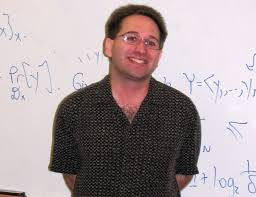
Scott Aaronson’s fascination with computation began, as he recalls, “when I was two or three.” As a child, he was obsessed with “huge numbers… infinity… the speed of light and black holes—just sort of pushing things to the limits.” His father, a science writer, introduced him to ideas like the Big Bang and relativity, but it was a Nintendo console that changed his life. “I wanted to create my own Nintendo games,” he says. “It seemed like these were whole universes that someone really understood because someone created them.”
At eleven, Aaronson realized that programming was itself a form of mathematics—a revelation that felt “almost like learning where babies come from.” He laughs, remembering the awe of discovering that “lines of code aren’t a summary of the game—they are the game.” That insight led to an early partnership selling shareware on AOL (“I think we made at least $30”) and, more importantly, to an enduring curiosity about the theoretical limits of computation.
At fifteen, he attended a math camp in Seattle and learned about the P vs. NP problem directly from Richard Karp, one of its inventors. “That really blew my mind,” he says. “That helped set the trajectory of my career.” His fascination with the deepest questions of computer science never left him.
Aaronson accelerated through school—skipping grades, leaving high school early, and enrolling at Cornell through a gifted-student program. Socially, it wasn’t easy. “People warned me that skipping grades would make things really hard socially, especially for dating,” he laughs. “That turned out to be correct. But I already didn’t like my social life… so I figured, if I’m not going to have that, at least I can be accelerating academically.”
As a graduate student in 2002, Aaronson created the Complexity Zoo, a now-legendary taxonomy of computational complexity classes. “It was largely for my own benefit,” he says. “I just started organizing what was known—what classes were contained in which others.” The project, thrown online almost casually, filled a major gap. “There was no one place where all this was summarized,” he explains. “People started using it because that was something they needed.” Today, Wikipedia has absorbed much of its content, but the Zoo still stands as a monument to the early internet’s collaborative spirit. “The animals need care,” he jokes, “but it’s still there—over 500 classes now.”
Aaronson’s public voice extends far beyond theory. His blog, Shtetl-Optimized, became a central platform for myth-busting around quantum computing. “I don’t feel like my job is to keep the public excited,” he says. “A lot of people are already overexcited about the wrong things.” For two decades, he’s challenged exaggerated claims from startups and journalists alike. The biggest misconception, he says, is that “a quantum computer basically just speeds up everything—that it’s the obvious next step after classical computers.”
He explains the reality with patient clarity: “A quantum computer isn’t just a faster classical computer. It’s a machine that exploits a different kind of probability—the amplitudes that can interfere and cancel out.” That interference, he says, is the real secret: “The game we’re playing is to choreograph interference so that the wrong answers cancel and the right one adds up.”
That nuance often gets lost in hype cycles—and he’s unflinching about why. “Venture capitalists aren’t afraid of funding garbage,” he says dryly. “Their fear is missing the next Google.” For many, investing in “quantum” is about optics, not understanding. “Some of them get it,” Aaronson says. “But others really don’t. They just think, ‘This is a space we have to be in, like blockchain or AI.’”
In 2022, he joined OpenAI to work on AI safety, later founding a new research group at UT Austin exploring the intersection of theoretical computer science and AI alignment. “We’re trying to make AI safer and more interpretable,” he explains. Projects range from understanding generalization to developing mathematical tools for neural net transparency.
One of his best-known contributions from that period is his work on AI watermarking—embedding cryptographic signatures into model outputs to identify generated text. “I came up with a scheme that lets you statistically prove a text came from a model,” he says. “It could help with academic integrity, spam, or misinformation detection.” While OpenAI didn’t deploy his system, Google DeepMind later adopted a similar method. “It’s not undefeatable,” he admits. “But it adds friction—and that’s a win.”
Aaronson’s curiosity stretches beyond computation to consciousness and free will. “Turing asked this 75 years ago: if a machine can converse indistinguishably from a human, does it understand?” For Aaronson, understanding exists on a continuum: “The broader the range of new scenarios where you can successfully apply a concept, the more deeply we can say you understand it.”
Despite his deep technical work, Aaronson’s reflections are often humanistic. He speaks openly about his Jewish heritage—his ancestors’ shtetls destroyed in the Holocaust—and about feeling “out of place in the world.” The title Shtetl-Optimized reflects that feeling. “Maybe if I’d lived hundreds of years ago, I would’ve been a Torah scholar,” he says. “Now, the closest secular equivalent I could find is theoretical computer science.”
He’s candid about political topics, too—defending free speech and advocating for nuance in debates about Israel and antisemitism. “It’s almost impossible to have these conversations in public,” he says. “People immediately assume the worst. But I want a two-state solution. I want both peoples to live in peace.”
Through all his work, Aaronson’s curiosity remains undimmed. “Nature has this exponentiality under the surface,” he says, describing quantum mechanics. “It’s weirder than any science fiction writer could invent. And we’re still figuring out what nails this hammer can hit.”
The 6Degrees team extends its heartfelt thanks to Scott Aaronson for sharing his time, insight, and extraordinary clarity of thought. His career reminds us that understanding—whether of computation, physics, or humanity—begins with curiosity, humility, and the courage to question what everyone else takes for granted.


Comments