
Robin Hanson on Prediction, Bias, and the Economics of the Future
- Nov 11, 2025
- 3 min read
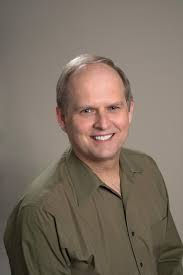
Robin Hanson’s path to becoming one of the most unconventional thinkers in economics began with a love of science fiction. “I wanted to understand the universe,” he recalls. “Physics seemed like the way to do that.” After earning degrees in physics and philosophy, Hanson worked as a researcher at NASA, where his focus shifted toward artificial intelligence and decision theory. “At NASA, I saw how organizations made choices—how information got distorted on its way up the chain,” he says. “That got me interested in how people actually form and use beliefs.”
He soon realized that his questions about belief and bias were, at their core, economic ones. “Economics gives you a language for understanding incentives,” Hanson explains. “It lets you see why people say what they say, and why systems behave the way they do.” He returned to academia for a Ph.D. in social science at Caltech, where his advisor was Nobel laureate Vernon Smith. “Vernon was deeply experimental,” Hanson says. “He taught me that if you want to understand behavior, you can’t just assume rationality—you have to measure it.”
Hanson’s early work on “idea futures”—what would later become known as prediction markets—was born from that insight. “The basic idea is simple,” he says. “People bet on what they think will happen. If you let them put money behind their beliefs, you get a more accurate forecast than you would from a committee or a poll.” He argued that markets could aggregate dispersed information better than almost any other mechanism. “Prices tell you what people really think, not just what they want you to hear,” he says.
That conviction put him at the center of a major policy experiment. In the early 2000s, Hanson helped design a Defense Department–funded “Policy Analysis Market” that aimed to use prediction markets to anticipate geopolitical events. When the project became public, it triggered a political firestorm. “Senators went on TV saying we were going to have people betting on assassinations,” Hanson recalls. “The project was canceled within a day.” But the controversy only strengthened his belief in the idea. “People misunderstood what we were doing,” he says. “It wasn’t about gambling—it was about finding truth.”
Hanson’s broader research tackles what he calls “the social economics of bias.” “Humans don’t believe things because they’re true,” he argues. “We believe things because they serve social functions—because they make us look good, or loyal, or impressive.” This theme runs through his 2018 book The Elephant in the Brain, coauthored with Kevin Simler. “Our minds evolved for social competition,” Hanson explains. “So even when we think we’re being sincere, much of what we do—charity, politics, even love—is about signaling.”
He doesn’t see that cynically. “It’s not that people are bad,” he says. “It’s that evolution rewarded behaviors that worked socially, not logically. Once you understand that, you can see the hidden motives everywhere.” The goal, he insists, isn’t to moralize but to understand: “We can’t fix bias unless we see it clearly—and that means being honest about our own incentives.”
Hanson’s next intellectual frontier is even more radical: the economics of the post-human future. In The Age of Em(2016), he envisions a world where human minds are scanned and uploaded into digital form—creating a society run by “ems,” or emulated minds. “If you take the assumptions of neuroscience and computing seriously, it’s hard to avoid that conclusion,” he says. “Once brain emulation becomes possible, it changes everything—economics, identity, morality.”
He approaches the topic not as a futurist but as a social scientist. “I’m not saying it will happen soon,” he clarifies. “I’m saying, if it does happen, here’s what the world will look like. There will be trillions of ems living in dense virtual cities, working almost nonstop, competing in markets with ultra-high productivity.” For Hanson, it’s a thought experiment with profound implications: “Thinking about ems helps us see what really drives civilization—competition, cooperation, and the relentless push to do more with less.”
Despite his reputation for bold speculation, Hanson insists his motivation is pragmatic. “I’m not trying to be provocative,” he says. “I’m trying to take our best theories seriously and follow them wherever they lead.” Whether discussing AI, health policy, or social signaling, he returns to a consistent theme: honesty about trade-offs. “If you want better systems, you have to reward truth-seeking,” he says. “Right now, our institutions reward conformity and performance. That’s not sustainable.”
Asked what gives him hope, Hanson pauses. “Humans have always been messy, biased, status-obsessed creatures,” he says. “But we also build tools that help us see past ourselves—markets, science, democracy. Those tools aren’t perfect, but they’re the best hope we have.”
The 6Degrees team extends its heartfelt thanks to Robin Hanson for sharing his insight, imagination, and decades of work challenging how we think about truth, bias, and the future. His career reminds us that progress begins with asking uncomfortable questions—and daring to see the world as it really is.


Comments